How Trapiche Gemstones Form in Nature

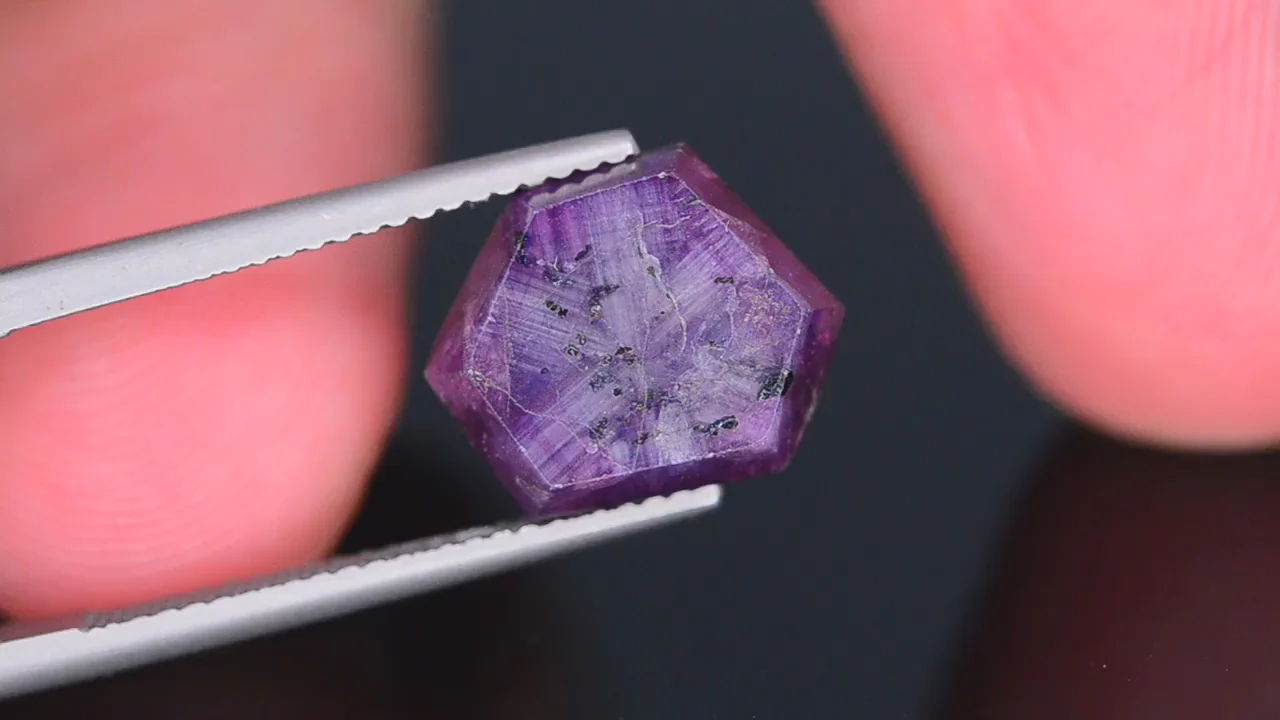
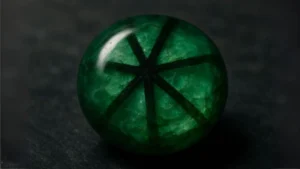
Trapiche gemstones are among the most fascinating natural crystal formations found in the gemstone world. Their most distinctive feature is the unique wheel-like pattern that appears inside the crystal, dividing the stone into symmetrical sections. This unusual structure forms naturally during the crystal growth process and cannot be created artificially through cutting or polishing.
Because the conditions required for their formation are very specific, Trapiche gemstones are considered extremely rare and are highly valued by collectors and gem enthusiasts.
Understanding the Trapiche Pattern
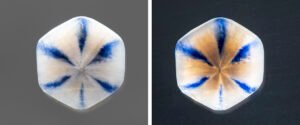
The word Trapiche comes from the Spanish term used for the grinding wheels of traditional sugar mills in Latin America. When viewed from above, Trapiche gemstones display a similar structure with six spokes radiating outward from the center of the crystal.
This natural pattern is created when impurities or mineral inclusions become trapped between the growing sectors of the crystal. These inclusions form dark or contrasting lines that separate the crystal into six distinct sections.
The result is a striking radial pattern that makes Trapiche gemstones instantly recognizable.
The Natural Crystal Growth Process
Trapiche gemstones form deep within the Earth under conditions of high temperature and pressure. As minerals slowly crystallize, they develop internal structures based on the chemical and geological environment around them.
During the growth process, the crystal may form separate growth sectors. If mineral impurities or different materials become trapped along the boundaries between these sectors, they create the characteristic radial pattern.
Several geological factors influence this formation:
- Slow crystal growth over long periods
- Changes in the surrounding mineral environment
- Presence of impurities or foreign minerals
- Sector-based crystal development
When these conditions occur together, they can produce the remarkable structure seen in Trapiche gemstones.
The Role of Inclusions in Trapiche Formation
Inclusions play a key role in the formation of Trapiche gemstones. These inclusions are tiny particles of other minerals that become trapped inside the crystal as it grows.
Instead of spreading randomly throughout the stone, these inclusions concentrate along specific growth boundaries. This creates the dark lines that divide the crystal into symmetrical sectors.
In many Trapiche stones, these inclusion lines extend from the center of the crystal to the outer edges, forming the famous wheel-like pattern.
Without these inclusions, the Trapiche pattern would not exist.
Types of Gemstones That Can Form Trapiche Structures
Although the Trapiche structure is most commonly associated with emeralds and sapphires, it can appear in several different minerals under the right conditions.
Some gemstones known to display Trapiche patterns include:
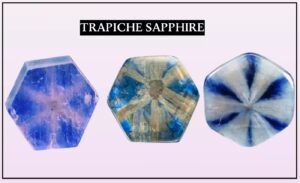
- Trapiche Sapphire – Rare and highly sought after by collectors
- Trapiche Emerald – Most famous and widely recognized Trapiche gemstone
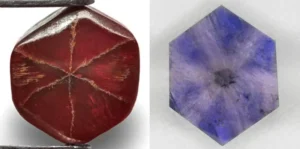
- Trapiche Ruby – Extremely rare in the gemstone market
- Trapiche Garnet – Occasionally discovered in certain mineral deposits
Each gemstone type forms the pattern slightly differently depending on the mineral composition and geological environment.
Why Trapiche Gemstones Are So Rare
Trapiche gemstones are rare because their formation requires a very precise combination of geological conditions. The crystal must grow slowly while mineral inclusions align perfectly along the sector boundaries.
Even when the formation process begins, the pattern may develop only partially or become distorted due to changes in the surrounding environment.
As a result, fully formed Trapiche gemstones with clear and symmetrical patterns are extremely uncommon.
This rarity is one of the main reasons why collectors and gem enthusiasts consider Trapiche stones so valuable and interesting.
Geological Importance of Trapiche Gemstones
Trapiche gemstones are not only beautiful but also scientifically important. Their internal structure helps gemologists and mineralogists understand how crystals grow in natural geological environments.
The patterns found in Trapiche stones provide valuable clues about:
- Crystal growth mechanisms
- Mineral inclusions during formation
- Changes in geological conditions over time
For this reason, many Trapiche specimens are preserved as mineral samples rather than being cut for jewelry.
Conclusion
Trapiche gemstones are extraordinary natural creations formed through a unique and complex crystal growth process. Their famous wheel-like pattern develops when mineral inclusions align along the boundaries of growing crystal sectors.
Because these geological conditions are rare, Trapiche gemstones remain among the most unusual and collectible stones in the gemstone world.
For collectors, researchers, and gemstone enthusiasts, Trapiche stones represent one of nature’s most remarkable examples of crystal formation.