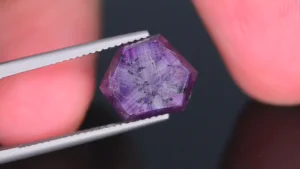
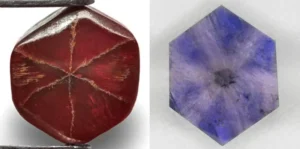
Trapiche Sapphire is one of the most fascinating and unusual gemstones found in nature. Known for its distinctive wheel-like pattern, this rare variety of sapphire has captured the attention of collectors, gemologists, and gemstone enthusiasts around the world. The unique structure seen in Trapiche sapphires forms naturally during crystal growth, making every stone a remarkable geological creation.
Because of their rarity and unusual appearance, Trapiche sapphires are highly valued among collectors who appreciate natural gemstones with exceptional and uncommon patterns.
What Is a Trapiche Sapphire?
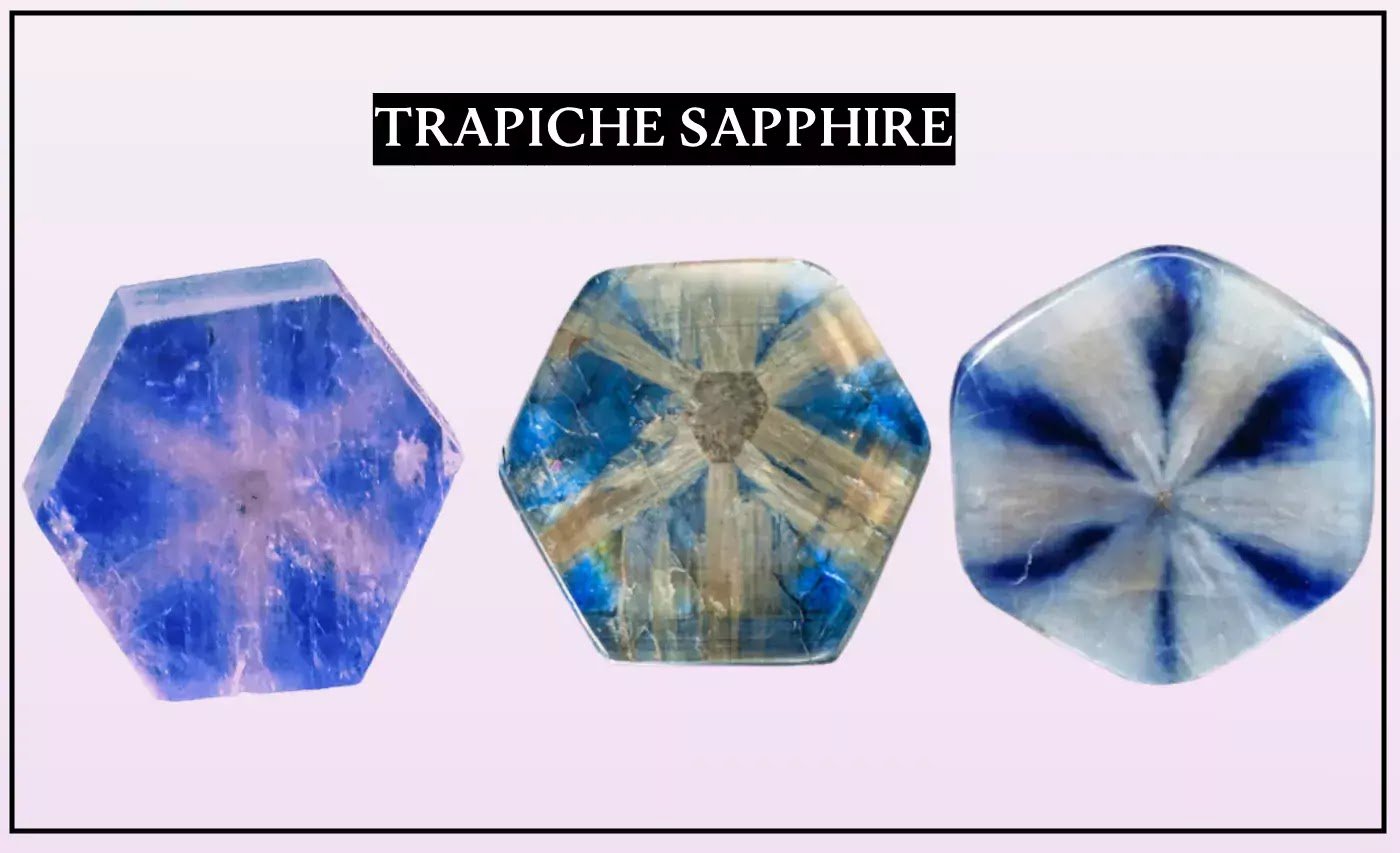
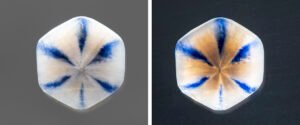
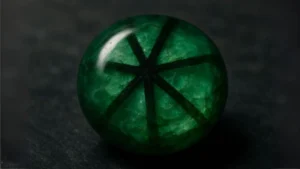
A Trapiche Sapphire is a sapphire crystal that displays a natural six-rayed pattern radiating from the center of the stone. This pattern divides the crystal into six symmetrical sections, resembling the spokes of a wheel.
The word “Trapiche” originates from the Spanish term used for the grinding wheels of traditional sugar mills in Latin America. When viewed from above, the structure of the gemstone looks very similar to these wheels, which is how the name was adopted in gemology.
Unlike many gemstone patterns that are created through cutting or polishing, the pattern in Trapiche sapphires forms naturally inside the crystal as it grows.
How Trapiche Sapphires Form
Trapiche sapphires develop during the natural crystal formation process deep within the Earth. As the sapphire crystal grows, impurities and mineral inclusions become trapped along specific growth boundaries.
These inclusions separate the crystal into different sectors, creating the famous six-rayed pattern that defines Trapiche gemstones.
The formation process usually involves:
- Slow crystal growth under high temperature and pressure
- Mineral-rich geological environments
- Inclusions forming along crystal growth sectors
Because these conditions must occur very precisely, Trapiche sapphires are extremely rare compared to ordinary sapphires.
Where Trapiche Sapphires Are Found
Trapiche sapphires have been discovered in only a few gemstone-producing regions around the world. Some deposits are known to produce crystals that occasionally develop the Trapiche structure.
Notable sources include:
- Myanmar (Burma) – Known for high-quality sapphire deposits
- Sri Lanka – Famous for a wide variety of sapphire colors
- Madagascar – A relatively newer but important gemstone source
- Pakistan and Afghanistan – Regions known for producing rare mineral specimens
However, well-formed Trapiche sapphire specimens remain extremely uncommon even in these regions.
Why Trapiche Sapphires Are So Rare
Trapiche sapphires are considered rare because their formation requires a very specific combination of geological conditions. The crystal must grow slowly while mineral inclusions align perfectly to create the symmetrical pattern.
In many cases, crystals may begin forming the Trapiche structure but fail to develop complete sectors, resulting in irregular patterns.
For collectors, the most valuable specimens usually have:
- A clear and symmetrical six-spoke pattern
- Well-defined crystal sectors
- Good transparency or attractive color
Because of these strict criteria, only a small number of Trapiche sapphires reach the collector market.
Why Collectors Love Trapiche Sapphire
Trapiche sapphires hold a special place in the gemstone world because they combine rarity, natural beauty, and scientific interest. Unlike traditional gemstones valued only for color and clarity, Trapiche sapphires are admired for their unique crystal structure.
Collectors appreciate these stones for several reasons:
- Their naturally formed wheel-like pattern
- Their rarity in the global gemstone market
- Their importance in mineral and crystal studies
- Their visual uniqueness compared to ordinary sapphires
Each specimen represents a natural process that took millions of years to form.
Trapiche Sapphire in Collections and Jewelry
Many Trapiche sapphires are preserved as mineral specimens because their natural crystal structure is especially valuable for collectors. However, some stones are carefully cut and used in jewelry, allowing the pattern to remain visible.
When set in jewelry, these gemstones create striking pieces that highlight the unusual natural pattern inside the stone.
Because of their uniqueness, Trapiche sapphires are often considered conversation pieces among gemstone collectors and jewelry enthusiasts.
Conclusion
Trapiche Sapphire is one of the rarest and most intriguing varieties of sapphire found in nature. Its natural wheel-like pattern, created during crystal growth, makes it both scientifically fascinating and visually remarkable.
Whether displayed as a mineral specimen or set into jewelry, Trapiche sapphires remain highly desirable among collectors who appreciate rare and naturally formed gemstones.
For anyone interested in unusual gemstones, Trapiche Sapphire represents one of nature’s most extraordinary crystal formations.