What Are Trapiche Gemstones? Formation, Pattern, and Rarity Explained

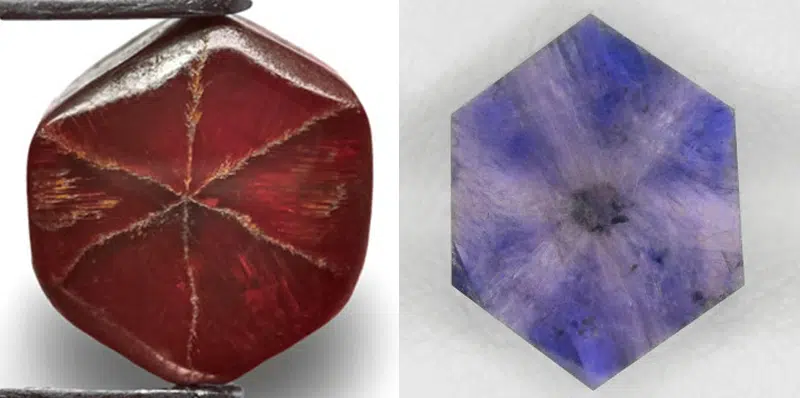
Trapiche gemstones are among the most fascinating and unusual natural gemstones found in the world. These rare stones are recognized by their distinctive wheel-like pattern that appears naturally during the crystal growth process. Because of their unusual structure and limited availability, Trapiche gemstones are highly valued by collectors, researchers, and gemstone enthusiasts.
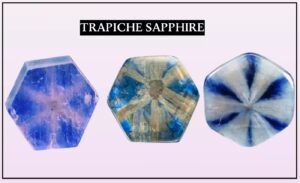
Although several minerals can display the Trapiche pattern, the most famous example is the Trapiche Sapphire, which is admired for its striking symmetry and natural beauty.
What Does “Trapiche” Mean?
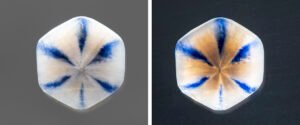
The term Trapiche comes from the Spanish word used to describe the grinding wheels of traditional sugar mills in Latin America. When viewed from above, Trapiche gemstones show a similar wheel-like structure with six arms radiating from the center of the crystal.
This pattern forms naturally within the stone and is not created by cutting or polishing. Each Trapiche gemstone is unique, making them especially desirable to collectors.
How Trapiche Gemstones Form
Trapiche gemstones form during the natural crystal growth process deep inside the Earth. During formation, different mineral inclusions or impurities become trapped in the crystal as it grows.
These inclusions create distinct radial patterns that divide the crystal into separate sections, producing the characteristic six-rayed structure associated with Trapiche stones.
The formation process usually includes:
- Slow crystal growth in mineral-rich environments
- Separation of crystal sectors during development
- Inclusion of impurities along growth boundaries
Because these conditions must occur very precisely, Trapiche gemstones are extremely rare.
Types of Trapiche Gemstones
While Trapiche sapphires are the most famous, several other gemstones can also display Trapiche patterns. Some of the known varieties include:
- Trapiche Sapphire – The most sought-after type among collectors
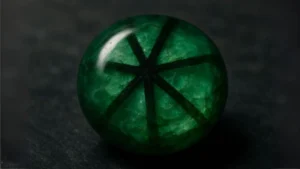
- Trapiche Emerald – Found mainly in Colombia
- Trapiche Ruby – Extremely rare and highly collectible
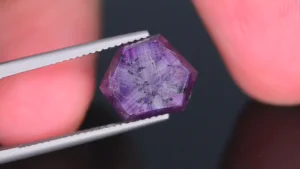
- Trapiche Garnet – Occasionally discovered in specific deposits
Each type forms under different geological conditions but shares the same distinctive radial pattern.
Why Trapiche Gemstones Are So Rare
Trapiche gemstones are considered rare because their formation requires very specific geological conditions. The crystal must grow slowly while mineral inclusions form symmetrical sectors inside the stone.
In addition, many Trapiche crystals form with fractures or irregular shapes, which means only a small number of specimens are suitable for collectors or jewelry.
Their rarity makes them especially valuable for:
- Mineral collectors
- Gemstone researchers
- Jewelry designers seeking unique stones
- Enthusiasts interested in unusual crystal formations
Trapiche Sapphire: A Collector’s Favorite
Among all Trapiche gemstones, Trapiche Sapphire is particularly admired for its striking natural pattern and durability. The sapphire’s hardness makes it suitable for both collectors and jewelry makers.
These stones display a fascinating wheel-like pattern that forms naturally inside the crystal, creating a gemstone that is both scientifically interesting and visually unique.
Because of their limited availability, well-formed Trapiche sapphires are highly sought after in the international gemstone market.
Why Collectors Love Trapiche Gemstones
Collectors appreciate Trapiche gemstones not only for their rarity but also for their scientific and aesthetic appeal. Unlike many gemstones that rely on color alone, Trapiche stones display natural patterns created by geological processes.
Some reasons collectors value them include:
- Natural and unique crystal patterns
- Geological rarity
- Limited availability in the market
- Strong interest among mineral and gemstone collectors
Every Trapiche gemstone tells a story about how crystals grow and evolve within the Earth.
Conclusion
Trapiche gemstones are truly one of nature’s most extraordinary mineral formations. Their distinctive wheel-like pattern forms naturally during crystal growth, making each specimen unique.
Whether found in sapphire, emerald, or other minerals, Trapiche stones continue to fascinate collectors and researchers around the world. Their rarity, unusual structure, and natural beauty make them an important and highly collectible part of the gemstone world.